Open networking showed up silently for many enterprises. While hyperscalers were already developing their own switches and disaggregating software from hardware a decade back, mainstream IT shops stuck to integrated stacks from familiar brands. That gap has actually narrowed. Part environments developed, network operating systems developed, and procurement teams discovered the utilize that originates from purchasing hardware and software individually. The result is a useful, defensible path to white‑box changing that does not require a squadron of PhDs.
I've developed and supported networks on both sides of the fence. Integrated chassis with single-vendor optics and upkeep, and leaf‑spine fabrics constructed from open network changes running a disaggregated NOS. The trade‑offs are real, and the advantages are equally genuine if you select your spots carefully.
What "open" actually implies on a switch
Disaggregation divides a switch into three layers. At the bottom is the merchant silicon: chips like Broadcom Trident/Tomahawk, NVIDIA/Mellanox Spectrum, and Intel Barefoot (Tofino) that move packages. Then comes the platform: the white‑box chassis with power, fans, timing, and management ASICs. On top sits the network operating system that programs the forwarding airplane using an SDK or an abstraction like SAI, and exposes functions to you by means of CLI, API, and automation.
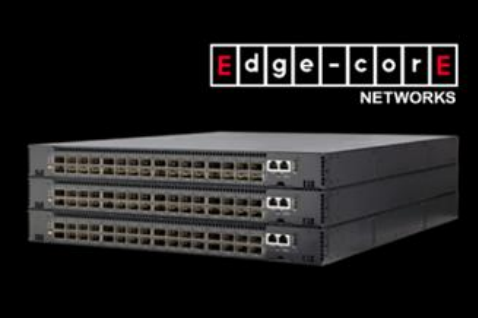
Open network switches are the physical platforms that accept numerous NOS options. You'll see design names from ODMs like Edgecore, Celestica, Delta, Quanta, and Accton, typically identical to rebadged units sold by brand‑name suppliers. The same 32x100G leaf may ship with different faceplates, labels, and a different software application image, however the internals are the very same. That commonality is what opens choice.
White box is less about color and more about contracts. You procure the hardware from a producer or integrator, the NOS from a software provider, and you piece together assistance. It seems like additional work-- up until you break down how it alters unit economics, lifecycle management, and vendor leverage.
Why companies transfer to disaggregated switching
Cost is the headline, but it's the flexibility that sticks. A 32x100G white‑box switch is frequently 30-- 50% cheaper than an incorporated equivalent when you remove out the premium for bundled software. You pay independently for the NOS license, typically on a subscription, and you avoid lock‑ins tied to optics.
Just as crucial is the release cadence. Merchant silicon features land broadly across platforms, and NOS suppliers focused on open hardware can include support faster than numerous integrated stacks. If you require VXLAN EVPN at the leaf, MPLS at the border, or in‑band telemetry with INT, you can pick a NOS whose roadmap aligns with your concerns. When your requirements alter, you can switch the NOS on the same base hardware, assuming compatibility, rather than forklift the platform.
There's leverage in procurement. If your present provider tightens terms or wanders off your roadmap, it's easier to pivot when software and hardware are decoupled. The conversation shifts from "replace whatever" to "change this layer."
The optics question: compatibility, power, and supply
Transceivers can make or break an open method. Integrated vendors often lock optics with coded EEPROMs and charge greatly for the opportunity. With white‑box switching, suitable optical transceivers from independent vendors become a viable default-- as long as you approach them soberly.
What matters in practice is not simply "suitable" coding but efficiency under heat, power draw, and producing consistency. On a thick 100G or 400G leaf, a watt occasionally per port adds up. I've seen 100G SR4 modules from 3 suppliers with power draws varying from roughly 2.7 W to 4.0 W; increase that throughout 32 or 48 ports and your thermal spending plan shifts enough to activate fan noise spikes and early failures. Request datasheets with common and max power, and confirm with a thermal cam during a pilot.
As for a fiber optic cables provider, the very best ones treat QA as a discipline. Try to find insertion loss varies with narrow tolerance, test reports per reel, and bend‑insensitive fiber where it aids with tight racks. Patch cables are often an afterthought until a layer‑one problem hinders a rollout. A strong supplier can shorten lead times and reduce surprises, particularly when a supplier's branded cable televisions are backordered.
On coding, lots of open NOSes honor the transceiver properly even with non‑OEM modules, but specific platform BIOS or BMC firmware variations can still throw cautions when EEPROM information is out of specification. Keep a spreadsheet mapping switch SKU, NOS release, and optic part numbers, in addition to pass/fail notes from your burn‑in tests. It sounds laborious. It saves days later.
Silicon forms the art of the possible
Merchant silicon households are not interchangeable in feature subtlety, and your choice of chip constrains what the NOS can do. Broadcom Tomahawk stands out at raw throughput and deep tables for VXLAN fabrics, while Trident families cater to enterprise functions with richer QoS options. Mellanox Spectrum silicon has deterministic latency and strong telemetry hooks. Tofino is programmable with P4 and makes it possible for bespoke pipelines, however you'll generally see it in specialized roles instead of mainstream leaf‑spine.
If you count on precise QoS hierarchies, complicated multicast, or subtle ACL behaviors, inspect the exact ASIC generation versus your design. Don't presume a NOS can expose a feature if the chip doesn't support it natively. I have actually enjoyed groups plan EVPN‑multihoming only to recognize their selected silicon managed MAC scale well but struck limitations on specific path types once they included renter churn. Check out scale numbers in varieties, not marketing optimums: "up to 512K paths" frequently translates to smaller sized, more sensible figures depending upon TCAM partitioning.
NOS options and operational models
Disaggregated NOS choices fall under three broad camps: business platforms from software‑focused suppliers, neighborhood circulations with industrial assistance readily available, and vendor‑supplied NOS connected to their white‑label hardware. The user experience differs commonly. Some provide a familiar CLI with a contemporary API exterior; others make you live in a declarative design and push through gNMI, REST, or streaming telemetry.
Automation is not optional with open equipment. You can still type at a console, however the ROI appears when you deal with switches like servers: image, bootstrap, config, validate, and drift‑correct programmatically. Golden images and zero‑touch provisioning shrink the toil. If your team is early in infrastructure‑as‑code, begin that cultural shift before you turn the first rack screw.
A steady pipeline normally appears like this: you pin a NOS release, define configs in a source‑controlled repo, produce device‑specific variables for loopbacks and underlay IPs, and run a CI task that lints, renders, and tests against a lab or emulator. When you push, you do it in waves with rollback baked in. The tooling can be light-- Ansible and a few Python scripts-- or full‑blown with Terraform companies and customized controllers.
Integration with the rest of the stack
Switches aren't islands. They bind to firewall programs, load balancers, storage networks, and out‑of‑band management. Disaggregated changing indicates each of those touchpoints needs clear contracts. For instance, your out‑of‑band network may use an older PoE switch for console servers; confirm serial console pinouts and USB console adapters match your white‑box models. I have actually wasted hours going after a "dead" console that required a different rollover cable.
On routing, EVPN over VXLAN is the workhorse. Interoperability in between a white‑box NOS running EVPN and a branded spine or border is usually strong if both sides adhere to the RFCs and common route types. Still, laboratory the handoffs: symmetric routing, anycast gateways, and IRB habits can differ in edge cases like MAC moves under bursty east‑west loads. Take note of BFD timers and route moistening defaults; values that look reasonable on paper can create brownouts with chatty hosts.
Storage fabrics are worthy of unique scrutiny. If you run iSCSI or NVMe/TCP at scale, procedure microbursts and latency under blockage with your chosen silicon and NOS. Functions like ECN, DCBX, or priority circulation control may behave in a different way than your current incorporated platforms. The exact same opts for multicast in VDI or market data feeds; make certain IGMP sleuthing quirks and querier placement are comprehended before production.
Procurement and assistance without a security net
The perceived threat of white‑box switching is "who do I call at 2 a.m.?" The practical answer is you arrange support the method big SaaS teams do: numerous, overlapping agreements with clear SLAs and escalation runbooks.
You'll desire hardware guarantee and RMA from the platform supplier or their channel, software support from the NOS provider, and smart‑hands or sparing technique for your sites. Choose whether advance replacement satisfies your healing goals or if you require on‑site spares-- a minimum of one leaf and one power supply per website is an inexpensive insurance plan. If your company has tight recovery times, think about a light touch managed service that covers after‑hours escalation. It's not a step backward; it's a way to keep a little network team from burning out.
Compatibility throughout these agreements matters. When a link flaps and optics are suspect, you do not want finger‑pointing. Put cross‑support language in the agreements where possible. Good partners will agree on joint troubleshooting Check out this site treatments and define data they require from you: assistance packages, platform logs, and telemetry snapshots.
The role of optics, cables, and physical plant
Layer one discipline pays dividends when you lean into disaggregation. Re‑use is attractive, however don't presume tradition OM2/OM3 links will keep spending plan at higher speeds. Map your fiber runs and calculate loss with margin. For short‑reach top‑of‑rack to spinal column, DACs are tempting, however 100G and 400G DACs can be thick, stiff, and short. Active optical cable televisions or brief SR modules might be worth the incremental expense for airflow and serviceability.
A telecom and data‑com connectivity strategy that mixes copper, multimode, and single‑mode must show your growth horizon. If you anticipate to move from 100G to 400G within 2 refresh cycles, skipping to single‑mode with DR/FR modules can make good sense even at greater transceiver expense. It streamlines later on upgrades and minimizes plant changes.
Build a little recommendation laboratory that mirrors your patching requirements. Train the hands that will move cables. Label density on white‑box faceplates can be constrained; a clean labeling scheme and consistent breakouts minimize mistakes when you're dealing with QSFP‑DD cages and 8x50G breakouts to Fiber optic cables supplier servers.
Operations: what in fact changes day to day
Day 2 operations enhance with an excellent NOS and telemetry pipeline. More than as soon as I have actually swapped a busybox shell on an integrated switch for a Linux userland on a white‑box and breathed easier: familiar tools, available logs, and a contemporary API. That stated, you inherit responsibility for variation selection and regression danger. Pin your NOS to an even cadence-- quarterly or semiannual-- and keep a staging environment that runs the next release for at least 2 weeks under artificial traffic.
Telemetry deserves intent. Streaming user interfaces like gNMI or OpenConfig feed time‑series databases with user interface counters, drops, ECN marks, and route churn. A standard set of SLOs-- packet loss listed below a portion of a percent on leaf uplinks, steady MAC and ARP churn within a determined band, BGP session flaps at no outside upkeep-- helps you identify problems before tickets get here. Export sFlow or INT where your silicon supports it to catch elephant circulations or microburst hotspots.
Change management ought to lean on staged rollouts. Upgrade 2 leafs in a pod, let them go through an organization cycle, then continue. If you have MLAG or EVPN‑MH, test failovers under load before a broad push. And do not skip BIOS/BMC updates on the platform. I have actually seen unpleasant bugs repaired just in a platform firmware release that the NOS installer didn't pull automatically.
Where open switching shines
The sweet areas are consistent. Leaf‑spine fabrics with generally L3, EVPN overlays, and a foreseeable feature set benefit very first. Edge aggregation layers with simple routing and ACLs come next. Campus cores are possible but need more attention to PoE, multicast for conferencing, and complicated QoS; many enterprises keep integrated equipment there longer, then fold in white‑box for circulation or micro‑DCs.
Brownfield information centers transferring to EVPN can deploy white‑box leaves while maintaining existing spines, provided EVPN interop is validated. It's a practical method to evaluate procurement and operations without risking the whole fabric.
Pitfalls to avoid
Vendor sprawl is the quiet killer. It's tempting to buy a couple of switches from one supplier and a various batch from another since of preparations. Six months later you're juggling divergent BMC versions and a little different air flow patterns that force asymmetric rack layouts. Choose 2 platform SKUs-- one leaf, one spine-- standardize, and protect those standards.
Beware feature creep throughout choice. If a requirement appears that depends upon a silicon function not supported by your selected platform, withstand the urge to include a one‑off. The maintenance concern of an unique platform for a single feature rarely pays back.
Finally, don't underinvest in documentation. With disaggregation, your knowledge becomes the glue. As‑built diagrams with silicon types, NOS variations, optics part numbers, and cabling specifications will save you when a senior engineer is on vacation and a pod requires immediate work.
How to pilot with very little risk
- Define a narrow scope: one rack pair of leaves, 2 spinal columns, and a border handoff. Keep the feature set to EVPN, MLAG or multihoming, and standard ACLs. Choose a single NOS and a single hardware SKU for the pilot. Prevent blending silicon families. Build a test strategy that consists of optics burn‑in at temperature level, failover events, and upgrade rehearsal. Run the pilot under real traffic for 30-- 60 days, with telemetry and a rollback plan. Capture spaces, choose whether they're functional or product fit, and adjust before scaling.
The optics supply chain as a tactical lever
When switches are open, optics end up being a line item you can enhance. Multi‑sourcing suitable optical transceivers lowers danger throughout lacks. Deal with providers who can code modules for your platforms and preserve modification control on firmware. Demand batch test reports and consider unique serial ranges per website for traceability in incident reviews.
For business networking hardware more broadly, standardize power and airflow. White‑box switches frequently come in port‑to‑PSU and PSU‑to‑port air flow variants. Mixing them in the very same rack develops locations and surprises throughout upkeep. Also, make sure extra power products and fan trays match air flow instructions and voltage. A mislabeled spare has actually ruined more weekends than any software bug in my experience.
Security posture in an open model
Security is often a factor to remain incorporated, but the open model can be as strong or more powerful when handled deliberately. With a modern NOS you get signed images, secure boot, and TPM assistance. Platform BMCs ought to be fenced with management ACLs, MFA for the remote console, and routine updates. Enable SSH ciphers you would accept on a server; disable antique management protocols entirely.
Supply chain integrity becomes a top‑level issue. Buy from channels with traceability. Examine shipping hardware for tamper proof, and confirm component serials upon receipt. Keep a list of approved optics and cable televisions from your fiber optic cable televisions provider and need part number verification before installation.
Beyond the information center: telecom and data‑com connectivity
Open switching isn't restricted to private information centers. Provider utilize white‑box platforms for access and aggregation, often with specialized NOSes that support MPLS, Segment Routing, and timing functions like SyncE and PTP. If your business straddles telecom and data‑com connection-- state, wholesale transport to multiple websites plus personal DCs-- you can take advantage of the very same hardware families across domains, however take care: timing precision and OAM feature depth vary by silicon and NOS. Test PTP border clock habits completely if voice or mobile backhaul trips your network.
A pragmatic adoption path
Start with a business‑aligned goal: lower per‑port cost for east‑west traffic, speed up releases, or break a vendor lock on optics. Equate that into technical targets: a particular leaf‑spine scale, EVPN function set, and a measurable deployment timeline.
Invest in the operational foundation first: automation, image management, telemetry, and a tidy procedure for upgrades and rollbacks. Choose one hardware platform and one NOS that fulfill your immediate needs, and bring along a single, reliable optics partner for the first wave. Expand just when the runbooks are uninteresting and your metrics show stability.
The upside feels tangible once it clicks. You buy switches as you buy servers: by requirements, not logo design. You pick a NOS for features you need now and a roadmap you trust. You deal with optics and cabling as crucial stock handled with information. And when the next requirement lands, you have options beyond a forklift.
Disaggregation doesn't get rid of complexity. It puts you in charge of where the intricacy lives. If you want to own that duty-- backed by disciplined suppliers and tested procedures-- open network switches and white‑box designs can end up being a competitive advantage instead of a science project.