Mission-critical applications do not forgive flakiness. Trading platforms, clinical imaging archives, airport operations, energy SCADA, 24x7 SaaS control airplanes-- they all assume the network is invisible and immediate, the way breathing is to a healthy person. When the network hiccups, users observe before NOC dashboards do. Creating strength in telecom and data‑com connectivity is less about buying the greatest boxes and more about disciplined architecture, modest redundancy in the ideal locations, and the sort of functional hygiene that prevents a small fault from becoming a significant outage.
I've invested enough nights in cold aisles and windowless POPs to establish strong viewpoints about what works. The path to strength begins with topology choices and ends with human process, with a great deal of useful compromises in between. Fiber routes aren't all distinct, optical transceivers aren't all equivalent, and "carrier varied" hardly ever indicates what sales decks recommend. The objective is a system that degrades gracefully under tension, recuperates predictably, and never ever surprises you for absence of telemetry.
Where strength lives: layers, not a silver bullet
Resilience emerges from layered choices. Physical plant matters since glass breaks and ducts flood. Optics matter because a mismatched transmitter and receiver can pass light yet fail under temperature level drift. Changing and routing matter since control planes converge with their own pace. Applications matter because retry reasoning, idempotent operations, and backpressure can make the difference between blips and brownouts. Lastly, operations matter since someone needs to spot Tuesday's CVEs without kicking over the chessboard.
If one of these layers is brittle, the others will bring the tension up until something gives. I have actually seen sites with pristine fiber varied paths go dark since of a single misconfigured spanning-tree domain. I have actually also seen commodity hardware outshine "carrier-grade" gear thanks to truthful observability and tested failover runbooks. The mandate is holistic: design for faults, determine the style, rehearse the failure, and keep learning.
Physical routes and the untidy fact about fiber diversity
On paper, 2 carriers getting in a structure on different sides look varied. In reality, their fiber often shares the exact same municipal avenue for long stretches. One backhoe can cut both. True diversity needs line-of-sight into the construction illustrations and community right-of-way maps, or a minimum of a documented diversity statement with path maps from the providers and a hunger to verify with an independent survey.
When you deal with a fiber optic cable televisions provider for your own dark fiber develops or school runs, specify not just the cable type but the route restrictions. I've had success needing at least 30 meters lateral separation between ducts for long school links and firmly insisting that lateral handholes terminate in different utility easements. For city and long-haul, demand carrier paths that diverge at the regional exchange and do not reconverge up until the metro boundary. If you can not get that, at least prevent shared river crossings, rail passages, and bridges that act as single points of failure. It's unexpected how frequently redundant routes reconverge at a bridge abutment.
Inside facilities, focus on risers and trays. Two varied feeds mean absolutely nothing if they share a plenum area above a filling dock. For cages and suites, I prefer physically separated meet-me spaces and distinct intermediate circulation frames, with power from different PDUs and breaker panels. Usage single-mode OS2 for new indoor backbone and school runs, and be sparing with tight bends; the minimum bend radius matters more than the marketed range ranking when a tray is jam-packed tight.
Optics: interoperability, temperature level, and coded locking
Optical transceivers are the peaceful workhorses that frequently get dealt with as an afterthought. Heat, vibration, dust, and mechanical tolerances all show up in filthy optics as mistakes before they appear as alarms. For 10G and 25G links, SR optics can feel forgiving, however as you move to 100G and 400G, the line between "works" and "fails under load" narrows.
Compatible optical transceivers are a genuine method to manage expenses, offered you use a supplier that licenses versus your target platforms, tests across temperature level profiles, supports DOM telemetry, and honors RMA timelines. What matters is not the logo design on the shell however the quality of the laser, EEPROM coding, and the supplier's process discipline. Focus on marketed DDM/DOM precision, write-protect habits, and firmware stability. I've had more pain from a hyperscaler-branded optic with buggy EEPROM than from a credible third-party module.
Brick types and fibers have real compromises. Short-reach 100G-DR or 100G-FR over single-mode can simplify new builds compared to SR4 with breakouts, specifically when you plan for future 400G. On the other hand, SR4 with MPO trunks can serve dense top-of-rack aggregation with simpler patching and lower per-port optics expense. For DWDM over city, budget plan margin for aging and temperature level: I go for a minimum of 3 dB of extra optical budget plan on the first day to accommodate splice loss and port deterioration over time. Always confirm transmit and get power, pre-FEC and post-FEC mistake rates, and laser bias currents after turn-up.
Keep an eye on fiber tidiness. Microscopic dust raises insertion loss and can imitate periodic faults. I try to stabilize a culture of "inspect, clean, examine" for every plug-in, with a lint-free wipe and proper solvent. It feels picky till you prevent a midnight truck roll.
Switching and routing: constructing a spinal column that can take a punch
The heart of resilience at L2 and L3 lies in foreseeable failure domains. Push state to the edges, consist of blast radius in the middle, and let the control airplane assemble quickly enough that upper layers can ride through. There are numerous methods to get there.
In information centers serving mission-critical work, a leaf-spine material with ECMP and BGP at the edge has actually proven resilient. EVPN for L2 extension across racks or websites can be effective if you resist the temptation to stretch L2 indiscriminately. Lose the practice of VLANs that cover the world; every flooded domain is a liability under duress. Where you should bridge across distances, be explicit about failure habits and attempt to keep the stretch to active/standby with clear witness logic.
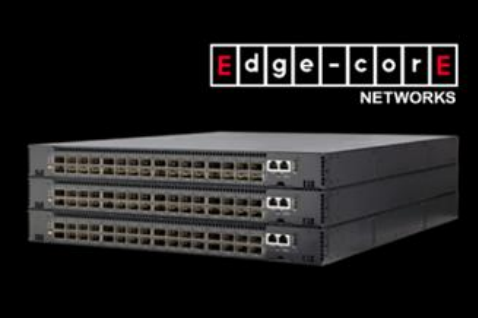
Open network switches have grown into trusted foundation when coupled with solid NOS options and disciplined automation. The appeal isn't simply expense; it's the freedom to pick software and hardware on benefit, and the transparency you get for telemetry and patching. I've had excellent outcomes blending open hardware with a business NOS for core materials, then using more traditional business changing at the remote edge where operational simplicity wins. If you go this route, standardize transceiver choices and MACsec capabilities early, and evaluate your automation on a laboratory fabric that mirrors the weirdness of your production one, not just the pleased path.
For service provider and campus backbones, quick convergence matters more than headline throughput. IGPs with tuned timers, GR/NSR allowed, and thoughtful summarization reduce churn. Section Routing can aid with deterministic failover and traffic engineering, however just if your team is prepared to run it; adding knobs without tracking and runbooks includes danger. MPLS stays a worthwhile tool when you need strict separation and constant QoS across paths.
The WAN is a probability field, not a guarantee
Even when you purchase "dedicated web access" or "private wave," you are still operating in a world of likelihoods. SLAs describe credits, not physics. Your job is to increase independent likelihoods of success. Carrier variety helps if the paths are truly diverse. Medium diversity assists a lot more: pair fiber with fixed View website wireless or microwave as a tertiary path. I have actually seen point-to-point microwave at 18 or 23 GHz trip through local fiber cuts and provide just enough bandwidth to keep the control plane and critical transactions alive. For rooftop microwave, buy tough installs, correct path studies, and rain fade margins; 99.99 percent availability requires link budget plans and fade analysis, not hope.
For remote websites, cellular has actually become a practical tertiary alternative. Dual-SIM routers with eSIMs let you swing between providers when one fails. That stated, CGNAT and jitter can ensure applications unpleasant. Plan your failover policies accordingly: perhaps tunnel your important control traffic over a relentless IPsec or WireGuard tunnel that remains up on all transportations, so the switch-over appears like a routing modification, not an application rebind.
Control your BGP with providers. Usage communities to influence routing habits, prepends for blunt instruments, and conditional advertisements so you don't unintentionally great void inbound when an edge stops working. If you need seamless incoming failover for public services, consider anycast for stateless work or DNS techniques with short TTLs for stateful ones. Simply be honest about application habits; brief TTLs don't ensure quick customer re-resolution, and some resolvers pin answers for longer than you think.
Power and cooling: networks fail like any other system
Too many interruption postmortems consist of a sentence about the network equipment being fine while the room overheated or lost power to one PDU. Mission-critical networks require the very same discipline as servers: dual power products cabled to separate PDUs, each fed by independent UPS strings and ideally different energy phases. Deal with in-rack UPS systems as last-resort buffers, not primary protection. And if your switches throttle or misbehave at heat, you wish to learn that in a staged test, not during a chiller failure at 3 a.m.
Small operational routines matter here. Label power cables by PDU and phase. Keep hot aisle containment tight. Preserve spare fans on website for chassis that permit field replacement. Monitor inlet temperature, not just space sensing units; the distinction can be 5 to eight degrees Celsius in a congested row.
Observability and the early caution system
You can not out-resilient what you can not see. Networks produce smoke before they ignite: microbursts on oversubscribed links, rising FEC counts on an optic, flapping adjacencies in a corner of the material, growing line tenancy under a brand-new workload. Develop telemetry that catches both control-plane and data-plane signals, at granularity that makes sense for your risk profile. Five-minute averages won't capture 500-millisecond microcongestion that hurts a trading app.
I prefer a mix of flow telemetry, streaming counters, optical DOM information, and artificial probes. A simple constant course test per critical circulation-- a low-rate UDP stream with known latency difference-- can detect localized problems before users do. For optical courses, chart pre-FEC BER and OSNR where you can; set notifies on rate of modification, not simply absolute thresholds, because early deterioration patterns are where you win time.
Logs aren't telemetry, however they inform the story. Centralize them, parse them, and alert on patterns such as keepalive loss bursts connected to user interface mistakes. Withstand alert fatigue with hierarchies and multi-signal connections. If a switch reports increasing CRCs, optical power droops, and STP geography modifications all within a minute, you have actually got a real problem worth waking somebody for.
Hardware choices: performance is easy, consistency is hard
Enterprise networking hardware gets sold on throughput and buffer sizes, however the traits that produce durability are quieter: deterministic firmware, stable control-plane under churn, clean upgrade courses, and a vendor that publishes cautions freely. Before standardizing, force the hardware to fail in your laboratory. Pull optics mid-flow. Flap power on one supply. Fill TCAMs. Send malformed frames. Observe not simply if it recuperates, but how predictably, and what it informs you while doing so.
Choose platforms that offer you deep counters, not simply marketing control panels. You wish to see per-queue drops, ECN marks, and precise timestamps on state changes. If MACsec or IPsec offload becomes part of your design, validate that it holds line rate on your package sizes and that crypto doesn't disable other functions you depend on. With open network switches, examine the community around your NOS of choice, from ZTP maturity to combination with your automation stack. Being able to drop in a standard SFP cage and a compatible optical transceiver without vendor lock helps both spares method and long-lasting cost control.
For line-rate cryptographic transport between sites, make sure your picked platforms and optics support the feature set end-to-end. I have actually experienced surprises where MACsec was supported on uplink ports however not on breakout modes, or where a particular optic coding disabled file encryption. A good provider will tell you this upfront. Ask pointed questions.
Designing failure domains and elegant degradation
Resilience is as much about what breaks as it has to do with what keeps working. Partition your network so that one failure hits a subset of users or services, not all of them. In information centers, prefer per-rack or per-pod self-reliance. In campuses, keep building-level aggregation physically and realistically unique. In the WAN, separate traffic by class and course, with explicit policy about what gets precedence on constrained backup links.
Your applications can help you if you tell them how the network acts under failure. When bandwidth collapses onto a cellular backup, maybe your tracking maintains complete fidelity while bulk replication backs off. This is a policy decision, not a technical inevitability. Mark traffic with DSCP regularly from the source and implement fair-queuing per class at blockage points. Be truthful about what gets dropped first when the backup link is a tenth the capacity. That honesty in policy turns a chaotic interruption into a controlled slowdown.
Procurement without surprises
Working with a fiber optic cables provider, a provider, and several hardware suppliers welcomes finger-pointing unless you specify interfaces crisply. Write contracts that define not simply speeds and feeds, however testing procedures, acceptance criteria, and time-to-repair with escalation courses. Make variety claims auditable. Document demarcation points down to jack labels. For optics, standardize part numbers throughout sites and keep an evaluated, identified spares set on hand, including spot cords, attenuators, and cleansing tools.
Be pragmatic with suitable optical transceivers. If your environment uses both open network switches and traditional business hardware, ensure your supplier codes and validates optics for each platform and firmware you run. Keep a matrix of which SKU maps to which platform, and bake that into your provisioning. This small discipline avoids a surprisingly big class of turn-up delays.
Finally, add lead times to your planning. Optical modules and specific switch SKUs have unstable supply chains. If your design depends on a specific 400G optic, secure a buffer stock or have an alternative course that utilizes various optics until supply normalizes.
Testing what you intend to rely on
Fire drills are much better than war stories. Arrange live failover tests in production for each site and interconnect a minimum of two times a year. Start with low-risk windows and grow your self-confidence gradually. The very first time you pull a primary uplink while applications run, you will learn something. Keep a runbook open as you go, and update it based upon truth, not assumptions.
Don't overlook long-lived flows. Some applications establish TCP sessions that last hours and respond severely to course modifications even when routing converges in numerous milliseconds. For those, consider session-resilient styles such as equal-cost multipath with per-packet hashing just where reordering is tolerable, or use technologies that tunnel and retain session state throughout path shifts. Constantly test with the same package sizes and burst qualities your real workload uses; a lab Ixia stream with 64-byte packets doesn't appear like a bulk image transfer or gRPC chatter.
Security without self-inflicted outages
Security controls typically trigger more downtime than assaulters do, particularly when placed late. Inline firewall softwares, DDoS scrubbers, and IDS taps introduce points of failure and failure obscurity. If you release inline gadgets, need bypass modes that really pass traffic on power loss and check them. Where possible, move to distributed, host-based controls and use the network for coarse segmentation and telemetry.
Zero trust concepts can make the network simpler, not more complex, when used attentively. If service identity and encryption take place at the endpoints, the network can concentrate on trusted transportation and focused on shipment. That stated, the transition introduces its own complexity; ensure your network QoS technique still has the signals it requires when traffic is encrypted end-to-end.
Operations: the practices that keep you out of trouble
Operational discipline turns a durable design into a durable system. Setup drift is the quiet enemy. Usage declarative automation, source control, and peer evaluation just as you provide for software. Keep golden images and adhere to foreseeable maintenance windows. When you must patch out-of-cycle, have actually a tested rollback plan that does not count on muscle memory.
Documentation needs to be living, not a dusty PDF. I keep diagrams that reveal not simply topology, however failure domains, demarc points, optical budget plans, and cross-connect IDs. When someone can trace a packet from an application server to a partner endpoint by following a copy of that diagram, you have actually reached a practical level of clarity.
Finally, cultivate a blameless postmortem culture. Source are rarely singular. The fiber got cut, yes, but the genuine lesson might be that both routes crossed the exact same rail passage, the monitoring didn't alert on increasing FEC errors the day previously, and the failover runbook assumed a DNS TTL proliferation that never ever happens on some resolvers. The outcome you desire is less surprises over time.
A quick checklist for new builds
- Obtain route maps and diversity attestations from carriers, validate with third-party information where possible, and prevent shared infrastructure choke points such as bridges and rail corridors. Standardize optics and cabling, validate compatible optical transceivers throughout your hardware matrix, and keep an identified spares package with cleaning tools at each site. Use leaf-spine with ECMP and BGP for information centers, include L2 domains, and test control-plane merging under tension; choose open network switches where they enhance observability and lifecycle control. Implement multi-transport WAN with true provider and medium diversity, prebuild tunnels across all paths, and define QoS policies for constrained failover scenarios. Build telemetry for optical health, queue tenancy, and synthetic probes; practice failovers in production with a runbook and update based upon what you learn.
When spending plans push back
Not every organization can purchase dual whatever. That's fine. Make deliberate options about where to invest redundancy. In many environments, a single well-engineered core with excellent tracking and a tertiary medium-diverse path beats a dual-core with shared threats and bad observability. Invest where you can't tolerate downtime: the main adjoin in between data centers, the edge that serves your earnings stream, the optical modules that run hot. Save where you can accept slower healing: lab segments, development links, or noncritical branch circuits.
Leaning on open communities can extend budget plans. Open network switches coupled with a fully grown NOS and a cautious spares plan frequently provide 80 percent of the ability at a fraction of the cost, without sacrificing durability. Set that with a credible fiber optic cables supplier and disciplined splicing and testing, and you'll eliminate many failure modes before they start. If you use compatible optical transceivers, direct the cost savings into monitoring and screening, where a small financial investment returns outsize resilience.
Lessons gained from the field
A few photos stick. A health center imaging archive dropped to a crawl after a restoration. The culprit wasn't the brand-new switches; it was a specialist who cable-tied a package too tight, including bend loss that didn't break links however pushed one optic's receive power near to threshold. DOM charts told the story, and a fiber re-termination repaired it. The lesson: display optical power, not just link state.
In a regional seller, both ISPs stopped working during a storm since their "diverse" routes crossed the very same low spot near a creek that overtopped. A low-capacity microwave link held the network together long enough to keep point-of-sale running in store-and-forward mode. A modest investment in a tertiary link plus clear failover policy prevented a costly outage.
At a SaaS service provider, a regular upgrade exposed a subtle TCAM fatigue issue in the leaf-spine fabric when route churn went beyond a threshold. The group had a laboratory that duplicated the scale, however not the failure path. After the event, they added churn generators to test plans and altered the upgrade choreography to drain pipes traffic effectively. Resilience improved not by altering hardware, however by learning how it breaks.
The throughline
Resilient telecom and data‑com connection isn't a product, it's a posture. You pick paths that fail independently. You pick optics and hardware you can observe and trust. You form the control plane to assemble quick and naturally. You give applications reasonable alerting about how the network will behave under tension. You compose runbooks you actually utilize. Above all, you demand evidence: tests that simulate truth, metrics that see problem coming, and vendors who reveal their homework.
When you do this well, the network gets boring in the best way. The pager remains quiet. The 2 a.m. cutover feels routine. Users keep breathing without observing. That is the step that matters.